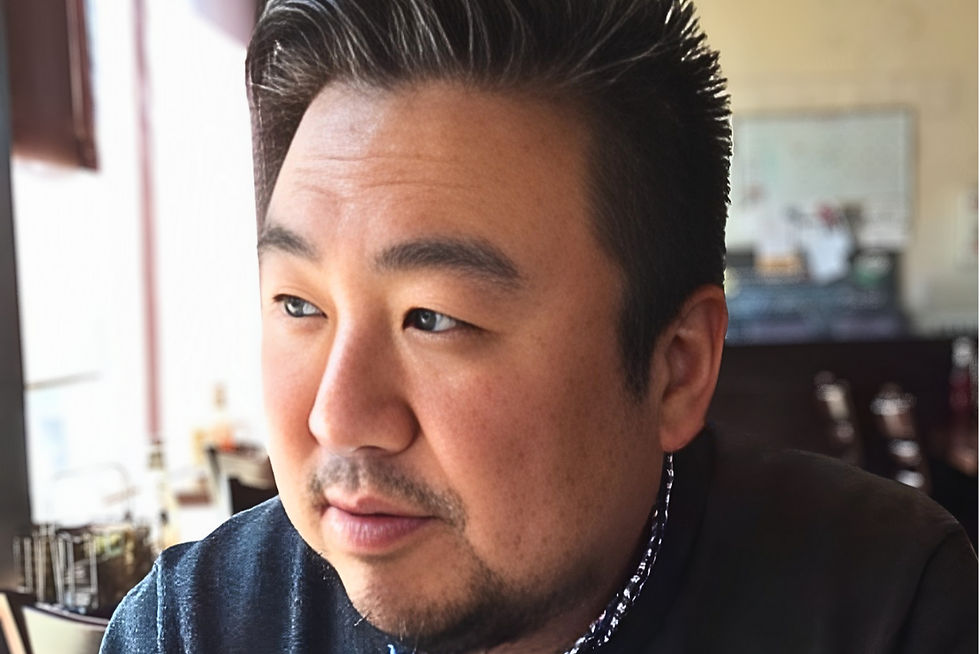
Anne Spielberg: Screenwriter & Author

Anne Spielberg co-wrote Big before character-driven filmmaking had that name. The 1988 film earned her an Academy Award nomination, a WGA nomination, and a People's Choice Award, and she'd already sold scripts to Fox, MGM, Universal, Warner Bros., Disney, Paramount, and Amblin. More than 35 projects written and sold across four decades in the studio system. After trips to Antarctica and the Chilean fjords, she became an advocate for glacial preservation, and that's where her first book came from. The Iceberg and the Penguin is forthcoming in 2027. The question she's been asking the whole time hasn't changed: not what happens, but who it happens to, and why that matters.
From this stage of your life, what do you recognize about yourself in the way you shaped the characters and tone of Big?
Now that I've crossed the line from being merely a grownup to being a senior citizen, I can look back almost 40 years to when I first started writing the movie Big. Being this age is an opportunity to see how I have changed, and how those changes in me would affect my choices of character and tone if I were to sit down and write the movie today. And what I can clearly see is that I wouldn't change a thing. I should also add that inside I am still a child.
What’s a moment where a small change on the page ended up shifting the emotional weight of the story?
There is one very, very small moment in Big that kickstarts the turning point in the plot where Josh is about to leave childhood and become propelled into the emotional world of adulthood. In a scene where he is being discussed by Susan and Paul as a threat to their climb in the corporate power structure, there is a slow closeup to a carton of milk on the table that has a picture of 12-year-old Josh on the side. The caption asks, "Have you seen this child?" It's the last time we see the child Josh — and even ask that question — until the end of the story. From here on, his actions and reactions begin to age and change, and he begins leaving his inner child behind.
How did working outside the industry change the kinds of stories you felt compelled to tell?
I've had many different kinds of jobs before and even during my career in the film industry. Those experiences and the relationships I developed I look back on as a blessing, in that they showed me the realities of people's lives outside the cocoon of the film industry. Every human has their own unique stories of joy and pain. And I saw that life was not only driven by things people did, or things that were done to them, but by how they reacted to life and their circumstances, and how that in turn affected their families and the people around them.
It made me realize that character drives the stories of us all, and that relationships were the foundations of their lives. As a writer, I found myself leaving behind plot-driven stories and engaging in character-driven stories about life and family dynamics.
What have projects that didn’t get made taught you about your own instincts?
I worked for many years primarily in the studio system. My instincts about the projects I wrote that didn't get made into films actually reinforced me to stay true to my voice and not the demands of the marketplace. I couldn't write what I didn't feel. Looking back, I realize that I should've left the studios and gone into independent filmmaking.
After decades in film, what did writing a book allow you to say that screenwriting didn’t?
Writing a book is the fulfillment of a dream of mine. I always loved the tactile feel of a book, the smell of the paper. I love paper. I love the private cocoon of your personal space where you read. All my life I've been more of a reader than a moviegoer or television watcher. Books don't need to follow the rules of films. You're not confined to the trends of the marketplace. You're not confined to any format or age group. You can be as imaginative as you want to be. It's like taking the censor off.
You can write it in prose or in poetry form. You can use pictures or not. They can be extremely long or very short. You can even have a page with only one word on it. Writing a book allowed me to stretch my imagination into an inanimate object — in my case, an iceberg — and bring it to life, with feelings and a longing for its home.
When Anne sits down to write, the work starts with who the character is before anything else moves. She built that instinct across decades of jobs, studios, and projects that never reached a screen. Those years shaped what she knows about people and what she trusts on the page.
Learn more about Anne at:
• Website
• IMDb