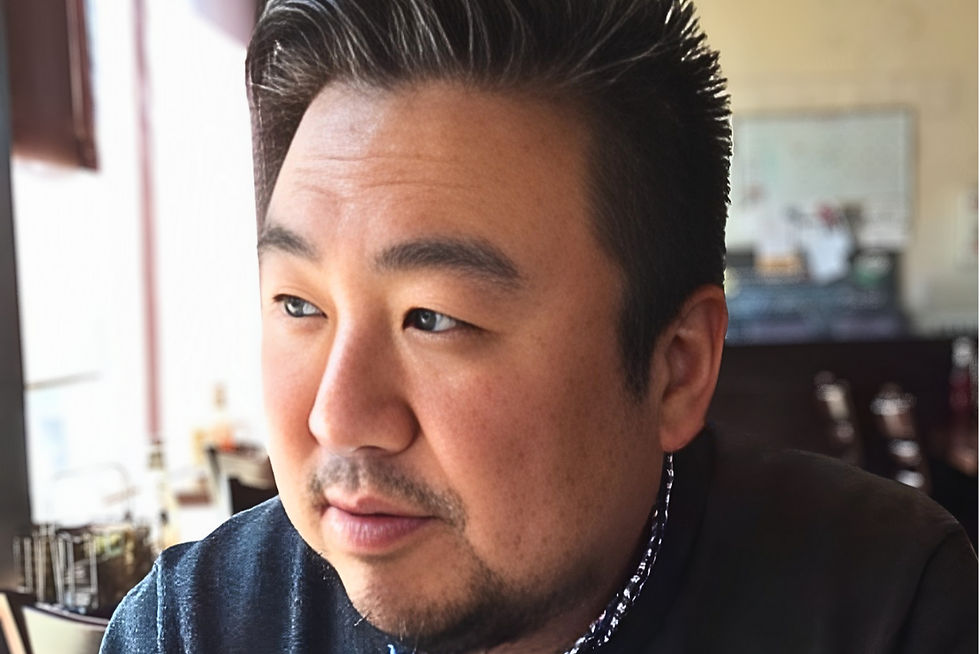
Daniel Ramirez: Unscripted Showrunner
Updated: May 18

Daniel Ramirez has built some of the most visible sports documentaries of the last decade by deciding early what access can and can’t buy. From More Than An Athlete to the Welcome to Wrexham spinoff Necaxa, and projects with Novak Djokovic and Kobe Bryant, his work takes shape under pressure. He works inside network mandates, global audiences, guarded teams, and timelines that never cooperate. The real authorship happens before the camera rolls. Boundaries, omissions, structural calls, and the quiet trades that set tone long before an edit exists.
When you’re shaping a series built on real access, what’s the first boundary you draw before anyone starts shooting?
Communication with talent and their handlers. Being documented can be very intimidating for a story subject. Seeing the void of a lens while exposing your life to strangers is no easy task. So letting story subjects, their handlers, teams, and families know we want to earn their trust, and that they can talk to us about any personal concerns, is the cornerstone of any documentary series.
Sports stories carry their own mythology. How do you decide what part of an athlete’s life stays off screen even when the access is there?
There’s a lot of research and development before we ever begin a story. There’s always retrospective storytelling that feeds the present (how the team or athlete got to their current state), which usually reveals the thematic true north of the project everyone should align to. Whatever doesn’t move the story in that direction usually gets let go.
Ninety-nine percent of the time, sports stories are ensemble stories, which forces you to pick what really needs to go on screen to move the story forward. Network and distributor mandates influence the project as well. If family stories are trending at a streamer, you can bet we’ll be asked to capture more of those story elements where possible.
Your work moves between leagues, countries and cultures. What early structural call keeps a global story from breaking apart in the edit?
Stick to universal themes (love, family, identity, etc.) and try as best as possible to get local contributors to adhere to classic “western” story structures. The real challenge is taking suggestions from local contributors that might be very regional and helping fit those ideas into a universal perspective and a story structure anyone can understand.
You can see this in the recent wave of great Korean and Nordic projects resonating in the U.S. They also push your brain a little because the format or themes won’t be 100% what audiences are trained to consume, or the order in which information is delivered. When those ideas are executed with the right emotions and stakes, the themes transcend that conditioning for people who, per se, are used to getting the full rundown of what to expect in the first 10 minutes.
It’s a challenge, but a good one. In an ever-changing world where AI is helping us watch stories in our own language with local dialects, we’ll be consuming more global stories moving forward.
When the production wants scale but the schedule wants speed, what’s the quiet trade that actually dictates the tone of an episode?
This is an unspoken issue many television producers wrestle with. This is where personal taste and experience take over. You have to trust your editors and their gut. That combined with strong preproduction work usually gets you out of that jam.
One of the More Than An Athlete projects I worked on suffered from this. We had a really beautiful family redemption story, but we ran out of time to fully explore it because of network mandates tied to marketing schedules. We ended up leaving about five minutes of story out that would have given the project a very different dimension. We split the difference and landed somewhere good, just not where we ultimately wanted to take the audience. It’s a delicate dance.
You’ve worked with teams that guard every inch of their image. What’s the moment you know you have enough truth to build the real story?
One of my mentors taught me to do the preproduction work so teams feel taken care of, then document and build bigger substories around real scenarios as they unfold. You capture those moments, try to give athletes and teams the most honest, well-rounded story possible, but you learn to let go of the constraints of these projects. You only have a small window of time, and you’re never telling the full story of a team. These projects are entertainment, filmed under human and corporate pressure, so the result is always an approximation of who the people in front of the lens are.
For truly raw sports documentaries, look at Zidane: A 21st Century Portrait, Senna, and the forthcoming projects on Novak Djokovic and Kobe Bryant. Zidane is a true verité film. You have to watch it with your heart more than your mind and think back to a man who has given the game everything and is truly exhausted by it. Senna is built entirely from archival footage. It’s a thing of beauty to do a character story using other people’s footage. For Novak, he completely opened up to our cameras. This is rare. He shared it all. For Kobe, we had complete around-the-clock access. When this comes out, it will change the idea of verité sports documentaries forever.
When Daniel Ramirez starts a project, the most important decisions are made before anything is filmed. He sets boundaries, decides what access can actually support a story, and accepts what will be left out. Those early choices shape what the edit can become under real production pressure.
Learn more about Daniel at: