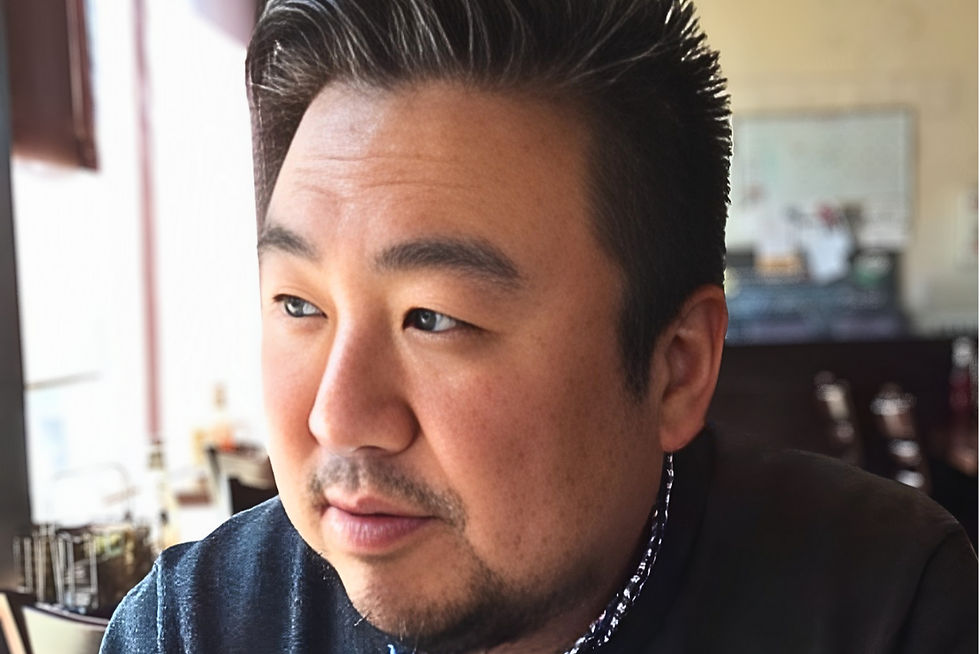
Marc Liepis: Late Night Producer & Strategic Communications
Updated: Feb 14

Marc Liepis has spent his career working on guest-driven television, where timing, preparation, and judgment decide whether a segment holds together or ends up on the cutting room floor. His work spans SNL, Conan, Fallon, Stern, and VICELAND, sitting between the host, the guest, and the edit. We talked about the decisions made before anyone walks onstage, the structure that keeps things from unraveling, and the moments when a segment’s fate is already set.
When you’re producing guest-driven segments, what’s the first quiet decision that tells you whether the moment will hold or fall apart?
There are a million ways segments can go south. As much as talk shows look smooth and off-the-cuff, there’s a considerable amount of prep that goes into each appearance. The greatest moment a producer can have in preparing a segment is knowing that your guest is coming to play. Yes, we’ll plug the project, but the ideal guest is coming on to have a good time and score in the process.
Even with all the preparation, in research, briefing the host, and getting the guest ready and psyched for their interview, much of the success or failure of the segment is out of your hands. When an actress promoting a premature-at-best memoir thinks it’s funny to say to the host, “You haven’t read the book, have you?” all you can do is be grateful for the edit.
You’ve handled comedians, actors, chefs, and everyday guests. What changes in your approach when you realize someone won’t carry their own segment?
Every guest is different. It’s about tailoring the experience to their needs. For comedians, it’s often structure and set-ups so they can hit the beats of material they prepped for the interview. For actors, it can be getting them out of their heads a little, or focusing them if they’re on an endless press tour. Chefs are usually demo segments, so it’s much more logistical with the crew and their team to make sure everything is in place. That, and warning the chef that the host’s job in these segments is usually to get in the way and goof off.
When alarm bells start to ring that a guest might be a dud or a handful (neither ideal) you try to build as close to a foolproof segment structure as you can. You prepare the host for what’s coming without souring them on the guest before they arrive. It also helps to let the executive producer know, so they can shift timing and maybe give a minute to another segment or guest. I’ve been lucky not to have this happen too often. And when it has, I’ve been surprised by some guests who left me profoundly relieved on the studio floor.
People assume these shows run loose. What’s the underlying structure you rely on to keep the energy from slipping?
It takes a fair amount of work to have a show feel and look loose. A segment producer’s role is to build a safety net for the host and the guest, structuring a conversation roadmap with no blind alleys (e.g., “You just got back from Brazil!” “Who told you that?”). The safety net is just that. In an ideal taping, the host and guest will go off on their own organically.
Having worked on both sides of the process as a publicist and a producer, the job is ultimately the same — we want the guest to look good and the host to enjoy them. When the guest is in sync, the energy is self-generating.
You’ve moved through network TV, Food Network formats, and now SiriusXM. What pressure point stays the same across all of them?
I’ve benefitted from changing formats and working with incredibly tight, talented teams.
I don’t know if this is a pressure point per se, but one thing that struck me when comparing network late night TV with Beat Bobby Flay or the Stern show on Sirius is timing. A late night segment is close to live-to-tape, so you’re prepping to fill less than ten minutes on a given day. Beat Bobby Flay is a longer process, where you’re keeping the co-host’s energy up and updating them on the beats of the show throughout the shoot. One episode takes several hours (the cooking competitions are in real time and edited down for air).
On the Stern show, I remember the first segment I worked on. I was panic-stricken that we were dragging because I was preconditioned for quick segment times, yet the team there was thrilled. They’re used to putting up a 3-4 hour freeform broadcast.
When the whole segment depends on the guest instead of the script, what’s the moment you can tell the limits are already locked in?
Any segments I’ve produced on unscripted shows rely on structure, whether it’s an interview, a game, or a cooking competition. You know the rules and the beats. The job is integrating the guest into that structure and making, then keeping, them comfortable with the process.
Thankfully, these shows treat their guests… like guests. Creating a welcoming and collaborative environment is baked into the entire process.
For Liepis, spontaneity is something you earn. The segment works because the conditions were built to hold it, the guest was set up to succeed, and the host was never left exposed. When it looks loose on air, it’s because someone already made the hard calls off camera.
Learn more about Marc at:
• IMDb
• Substack
• Medium