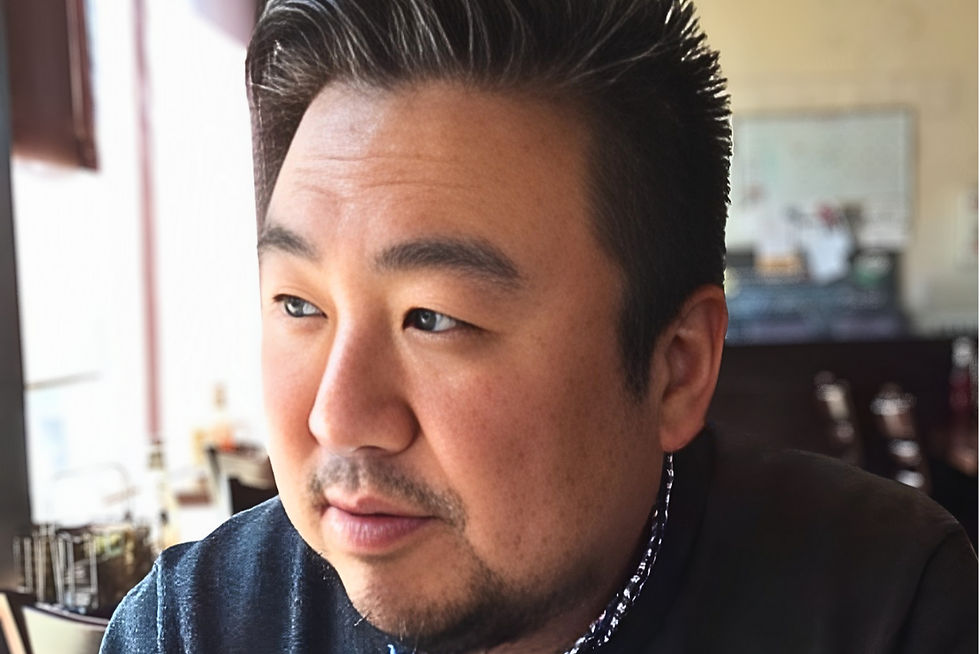
Maureen Kritzer-Lange: Psychoanalyst, Women’s Mental Health

Maureen Kritzer-Lange has spent more than 25 years in private practice as a psychoanalyst, focusing on women’s mental health, eating disorders, body image, sexuality, and life transitions. Trained at Syracuse University and New York University, certified through the Center for Psychotherapy and Psychoanalysis of New Jersey, and a former president of the Eating Disorders Association of New Jersey, her work centers on how language, affect, and self-perception shape identity long before behavior shifts. We talked about the split between words and emotion, the move from “I am” to “I feel,” and the patterns of self-erasure that hide inside niceness.
When you're listening to a patient tell a story, what's the first invisible signal that tells you the story isn't actually the thing they're describing?
The moment that tells me the story isn’t the story is when their emotional rhythm disconnects from their words. Their voice keeps going, but their breath shortens, their eyes lose focus, or they suddenly speed up as if outrunning something. That break in congruence is my cue that we’ve reached the real material. There is a disconnect in their affect from the content. People rarely hide the truth; they may distance themselves from it because it brings on conflictual or possibly traumatic feelings. I’m listening, pacing and tracking the dysregulation in their nervous system.
I often will ask how they are feeling in the moment. Once we slow down and take a look at what is happening in the moment with compassion, the story underneath can finally come forward, and that’s where the healing actually begins. This may take place over time. It doesn’t necessarily happen in one session.
In your work with self-image, what's the smallest shift in language that quietly changes how someone relates to themselves?
The smallest but most transformative linguistic shift is moving from identity statements to emotional statements. When someone says, “I’m disgusting,” “I’m lazy,” or “I’m broken,” their entire sense of self collapses into that moment. When we replace “I am” with “I feel,” something remarkable happens. “I feel insecure,” “I feel tired,” “I feel overwhelmed”—suddenly the emotion becomes fluid, movable, workable.
Another example is “I am an anxious person” versus “I feel anxious.” That small shift can create awareness in how someone sees themselves. It gives people room to breathe, to choose, to respond rather than react or collapse. In my work with eating disorders, I often hear “I feel fat.” Fat isn’t a feeling. Understanding the feeling underneath that comment can bring a shift in how someone feels in their body.
Language is the earliest mirror we learn to trust or fear—changing a few words can begin to rewire how someone experiences their worth.
You've spent decades watching how people present one thing and feel another. What's a pattern most people never recognize in their own behavior?
The pattern I see constantly—and most people don't recognize—is the way they mistake pleasing for bonding. They're performing emotional gymnastics: anticipating needs, smoothing tension, shrinking their voice. It looks generous on the outside, but on the inside it's panic-driven self-erasure. They believe that if they become easier, quieter, more agreeable, they'll finally feel loved. But what they're really doing is abandoning themselves to avoid being abandoned. That self-erasure takes many forms. With an eating disorder, people become invisible, lose their voice and sense of themselves. Food becomes their primary relationship and way of coping in a very insidious and self-destructive way.
When clients realize their "niceness" is a coping strategy, not a personality trait, everything changes. The work becomes teaching them to tolerate disappointing others so they can finally stop disappointing themselves. Learning to set boundaries and limits is very challenging, but also empowering. That's when their real relationships begin.
When someone is stuck, what's usually the real blockage you're watching for beneath the surface explanation?
Beneath every “stuck” story—whether it’s about food, a relationship, career or anxiety—I’m looking for unprocessed feelings. This could be complex, such as loss, a traumatic experience, relational stress or experiences that never got talked about. An unspoken feeling or unresolved moment. That unresolved experience becomes a blockage the psyche organized itself around.
People think they’re stuck because they’re weak or unmotivated, but in reality, they’re protecting an emotional wound that never healed. When we explore and process the experience where they felt unsafe, unseen, or unworthy, healing can happen . Insight alone isn’t the cure; it’s feeling the feeling they’ve spent years outmaneuvering. Once that happens, movement becomes possible—not because they’re pushing harder, but because the internal freeze finally melts.
You've built a career around helping people trust the mirror again. What's one internal decision people make that alters their entire emotional read without anyone else noticing? The most powerful internal shift—one that no one else sees but everyone around them eventually feels—is the moment someone decides they will no longer be their own enemy. When someone shifts internally toward loving who they are from the inside rather than focusing on their outer appearance for self-esteem.
It’s incredibly subtle. Their posture changes. Their tone softens. They stop narrating their life with a relentless critical voice. This decision isn’t a declaration; it’s more like a quiet choosing that forms over time. They commit to being on their own side, even imperfectly.
That inner alignment reshapes everything: boundaries, body image, recovery, relationships, and the entire emotional “read” of their life. The mirror stops feeling like a weapon and becomes a checkpoint rather than a judge. Once someone chooses self-companionship and self-love over self-criticism, they don’t just heal—they transform.
When Maureen talks about healing, she’s listening for the moment the words and the body part ways. The breath that tightens, the language that shifts from “I am” to “I feel,” the decision to stop turning the mirror into a verdict. The invisible work lives in those shifts—small internal choices that reorganize how someone experiences themselves without announcing the change.
Learn more about Maureen at:
• Website