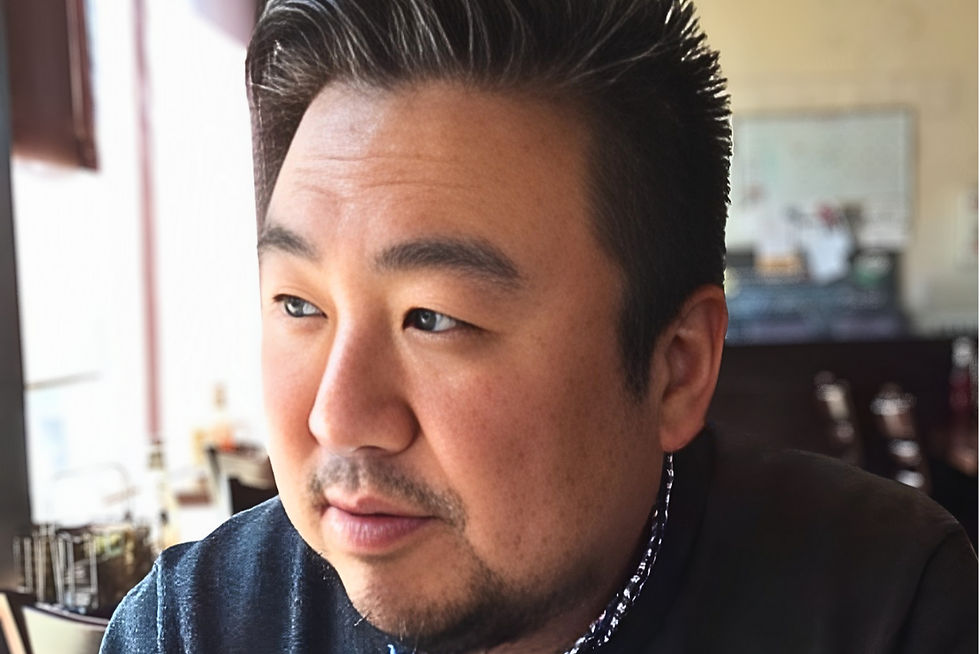
Branko Ruzic: Development Analyst & Script Architect
Updated: Feb 6

Before working in TV writing and international development, Branko Ruzic trained in writing, forensics, counterterrorism, and cryptography. That background shapes how he reads scripts, by testing structure, constraint, and consequence instead of surface execution. Most of that work remains invisible, but it determines whether a story holds together under pressure. We talked about stress points, hidden rules, and the decisions that determine whether a story breaks.
When you’re breaking a story, what’s the first structural inconsistency that tells you the script isn’t being honest with itself?
The first red flag is when a character makes a choice that only works because the plot needs it to happen, not because it’s what they would actually do given everything I know about them and their circumstances. It often shows up as: “Why doesn’t the protagonist just…?” If there’s an obvious solution they’re avoiding, and the only reason is “because then we wouldn’t have a story,” that’s the script lying to itself. The military analyst in me spots this fast because in real strategic situations, people operate within constraints: resources, information, risk tolerance, competing priorities. When a character ignores their established constraints without good reason, or when the rules of the world conveniently shift to create drama, that’s structural dishonesty. It’s hard to justify. The related tell is when the antagonist becomes suddenly stupid.
Coming from an analytical background, what’s the invisible pattern you look for in a character that most writers never check?
I don’t really think about what most writers do when I’m in the work. What I look for, what my analyst brain tracks automatically, is whether a character has a decision-making logic that holds up when I stress-test it. The invisible pattern is: what does this person protect when they can’t protect everything? In intelligence work, you learn that people reveal their true priorities when resources are scarce or when they’re forced to trade one value against another. Fiction is the same. A character who wants to protect their family is generic until you ask: would they lie to their family to protect them? Betray an ally? Sacrifice their principles? When does the cost become too high?
In development, every idea has a weak point. What’s your method for stress-testing an IP concept before anyone else notices the flaw?
The weak point in most concepts is that they’re built around a moment, not a system. A great premise creates a situation where the central conflict is self-renewing, where solving one problem naturally creates another, where the world’s rules make the tension structural instead of manufactured. The analytical approach is to reverse-engineer the concept from multiple threat vectors: a) Protagonist angle. What happens when they’re competent? Does the story still work, or does it rely on them being conveniently incompetent? b) Antagonist angle. What’s stopping the opposition from winning immediately? Is it a real constraint or a contrived one? c) World logic. Are the rules robust enough that smart characters can exploit them in unexpected ways, or so vague that you’ll be retconning constantly?
What signals that a suggestion is addressing the real problem instead of covering it?
From an analytical standpoint, I’m checking whether the suggestion addresses root cause or symptoms. Symptom fix: “The audience won’t like this character, so let’s give them a charming quirk.” Root cause: “The audience won’t like this character because their goals don’t justify their behavior. We need to either change what they want or change what they do.” A real fix has cascade effects. If someone changes a character’s motivation in act two and it genuinely addresses the structural issue, then beats in acts one and three should probably shift as well. If they don’t need to, if the suggestion somehow fixes everything while leaving the rest of the story untouched, that’s suspicious. Real problems are integrated into the structure. Real solutions require structural adjustment.
Across the projects you’ve touched, what’s the one hidden decision that determines whether a story collapses or survives revisions?
In intelligence work, you learn to distinguish between what’s decorative and what’s structural. Some elements can be removed or modified without affecting the system; others are holding everything up. The hidden decision is whether your story’s emotional core is load-bearing or decorative. If your story is about “learning to trust again” but the plot is “stop the terrorist attack,” those might connect, but they’re not the same thing. But if it’s "can someone who’s been betrayed bring themselves to rely on others when that’s the only way to stop the threat,” now they’re fused. The plot becomes the emotional question made concrete.
When Branko talks about story, he focuses on the unseen logic that determines whether a world holds together. Every choice has consequences elsewhere in the system. For him, the invisible work is the part that keeps the story honest under pressure.
Learn more about Branko at:
• IMDb
Afterword:
The final caveat: Most of my fiction work has been as a hired gun. I’ll tell the money people what I see, diplomatically but clearly, with the reasoning behind it. At the end of the day, it’s their money and their vision. If they want to pursue a direction I’ve flagged as problematic, that’s their call, and I respect that. My job is to give them the best analysis I can, to stress-test their concept honestly, and then to execute their decision as well as possible. Sometimes that means watching a project go forward when I know it’s structurally compromised. Sometimes the flaws I identified turn out not to matter in the market. Sometimes they matter exactly as much as I thought they would. The analyst mindset applies here too: I can identify risk, but I don’t control outcomes.