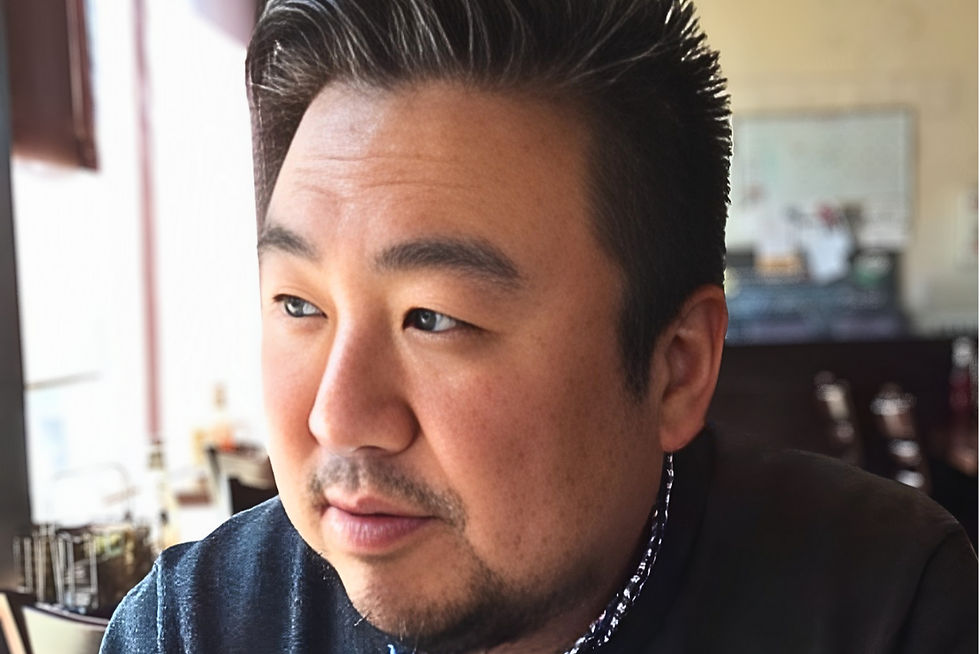
Mark Steines: Television Host & Photographer
Updated: Feb 14

Mark Steines has spent decades shaping how audiences experience the biggest moments in entertainment. After years hosting major programs like Entertainment Tonight and Home and Family, and steering live coverage at the Oscars, Emmys, and Grammys, he knows how to guide viewers through the noise. He also works as a headshot and portrait photographer, which sharpens his on-camera instincts. What people miss is the invisible calculus underneath — the split-second reads, the background triage, the early choices that decide whether a moment feels real or manufactured long before it reaches air. We talked about presence, pressure, and the unseen work that keeps a live moment alive.
When shaping a moment on camera, what’s the invisible decision that decides whether it feels real or manufactured?
For me, it always comes down to choosing authenticity over performance. The most important thing is actually listening — really listening — and staying open to whatever the other person gives you. When you let their answers land and affect you, they can feel it. That’s what makes a moment honest instead of manufactured.
You’ve spent years making live TV look effortless. What’s the part the audience never realizes you’re managing in the background?
There’s a constant juggle happening behind the scenes. On a red carpet, for example, you’re tracking who’s approaching, who you might lose if you stay too long with someone else, and how to gracefully disengage without offending anyone. You’re also keeping an eye on pop-culture context and current events so you don’t come off tone-deaf. And of course, going in with solid research matters — you never want to stumble into something sensitive and appear uninformed or insensitive.
When a guest is nervous or guarded, how do you get them to drop in?
Eye contact goes a long way. It gives them something to connect to instead of whatever anxiety is running through their head. Sometimes a simple hand on the shoulder helps ground them. I’ll also use a little humor or self-deprecation — something like, “This is probably the most ridiculous question you’ll hear today…” It redirects attention back to me and breaks the tension. Once they’re out of their head, the real person usually shows up.
When deciding how much to reveal in a moment, what tells you to stay with the real beat or pivot to something more produced?
I think of a moment I had with Cher while interviewing her about her book of “firsts.” She didn’t want to answer anything that might give away content, so we hit a wall. I finally asked, “Well, what do you want me to ask you?” And she said, “Ask what you want to know — not what your producers wrote.” So I took a breath and said, “Do you really want to know what I’m wondering? … I want to know why you’re so damn sassy.” She burst out laughing. That honest beat turned into a three-minute exchange that aired exactly as it happened. Sometimes the real moment is the best production value you can offer.
When you think about your career, what’s a moment where the unseen work mattered more than the visible performance?
One that stands out happened after Princess Diana passed. The pressure on every news outlet was enormous — everyone wanted to be first, to get something others didn’t. At one of the memorial sites, a producer I worked with grabbed an elderly couple who were clearly grieving and spun the man around asking where the front of the castle was. I understood the pressure she was under, but it didn’t sit right. I stepped over to the couple, looked them in the eye, and apologized. It was important to reconnect on a human level — to remind them, and myself, that their grief mattered more than any satellite feed or broadcast deadline. That moment had nothing to do with performance and everything to do with being a decent human being.
When Mark talks about on-camera work, he’s talking about the small decisions that make a moment land as human instead of staged. For him, the invisible work isn’t performance. It’s presence. And that’s what people feel long before they know why.
Learn more about Mark at:
• IMDb
• Website