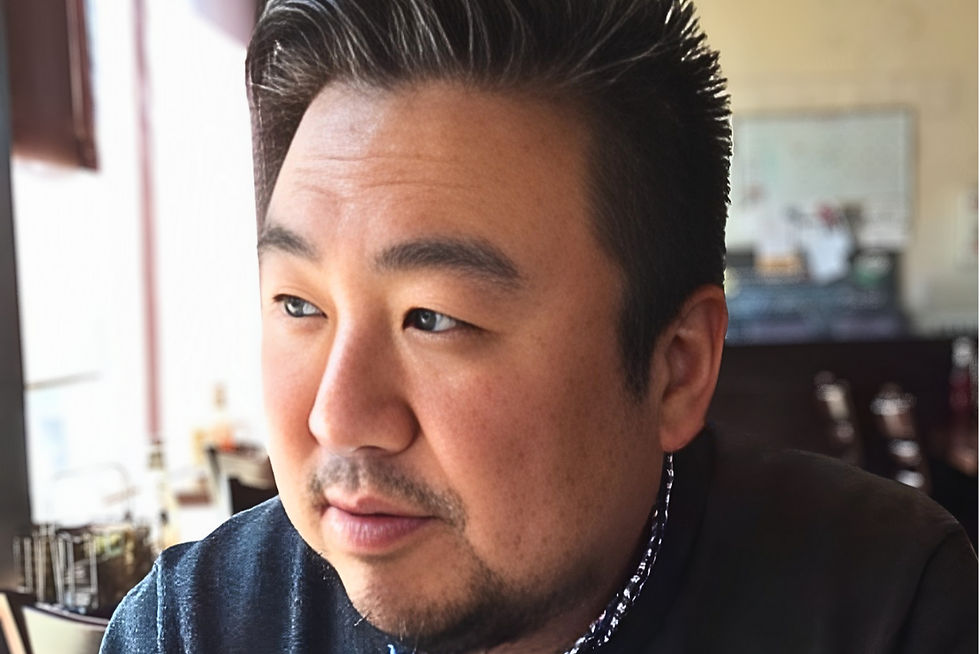
Mark Simon: Storyboard Artist
Updated: Dec 10, 2025

Mark Simon is the storyboard artist behind Stranger Things, The Walking Dead, Dexter, Lioness, and a few thousand other moments people know without ever knowing who shaped them. He’s the one translating a director’s early ideas into something the crew can actually shoot. Most of that work stays off screen, but it holds the sequence together. We talked about how he builds a scene under pressure, what he notices before anyone else does, and the choices that quietly decide whether the moment works.
When you break down a scene for Stranger Things or The Walking Dead, what’s the unseen choice that decides whether the sequence actually works before anyone shoots?
Breakdowns happen with the director. I sit with them and sketch each shot to capture their vision. I also create animatics in real time so the director can see the sequence play out and decide if it works. What the public doesn’t see is that the showrunner usually reviews the storyboards and gives final approval. As I work, I’ll play with the shots to enhance the sequence. The animatics let me see ways to make the sequence play out better.
You’ve storyboarded thousands of projects. How do you spot when a director hasn’t fully “seen” the shot yet, and what do you do to pull the vision into focus?
It’s pretty easy to tell when a director doesn’t know what they want to shoot yet. A prepared director immediately starts explaining the scene, camera, and actor placement. An unprepared director has no specific direction. Sometimes that’s because a script or location changed and prep time is short. So, I’ll work with the director to brainstorm ideas and build the scene. I offer suggestions while keeping the director’s visual language, and that of the show, in mind.
In long-running shows, familiarity creates blind spots. What part of visual logic do crews overlook, and how do you correct it at the board stage?
I’ve never run into blind spots from familiarity. More often I run into new directors on a show who aren’t familiar with how it’s normally shot. On The Walking Dead, I’ll get questions like “Have you killed walkers this way yet?” or “What’s a new way we can kill a walker here?” Familiarity actually helps on long-running shows.
You’re known for speed. What’s the tradeoff people miss when a storyboard artist works fast, and how do you keep the work sharp without showing the seams?
Working fast gets a first pass done quickly and doesn’t waste a director’s time. But taking time to sit with a sequence lets me catch issues, avoid crossing the line, and keep the storytelling consistent. When I can review a scene, I usually find better solutions, and cleanups make the boards clearer and more inspirational for the crew. Moving quickly still helps me go with the flow and not get stuck on unimportant things. Few things bring out creativity like a deadline.
You move across genres easily. What shifts in your process when you’re shaping tension or timing, and what stays invisible to the audience no matter the style?
For me it’s all visual storytelling. I just need to be familiar with the project or series to jump in and nail it. I stay so busy I often jump between genres in the same day, so I seldom think about it. I just do it. When I join an existing series, I try to watch a number of episodes first so I can capture the style. When I started storyboarding on Taylor Sheridan’s Lioness, I watched the first two episodes of the first season and the last two of the previous season so I knew the arc.
It helps to be a fan of a genre. Someone who isn’t into horror will have a hard time boarding a horror project. Someone who isn’t innately funny will have trouble drawing funny boards. Your personality can affect the projects you’re best at.
For Mark, the work isn’t the sketches. It’s the choices that shape how a moment moves, where the eye goes, and what the audience never questions. The invisible part is what holds the whole sequence together.
Learn more about Mark at:
• Website
• IMDb