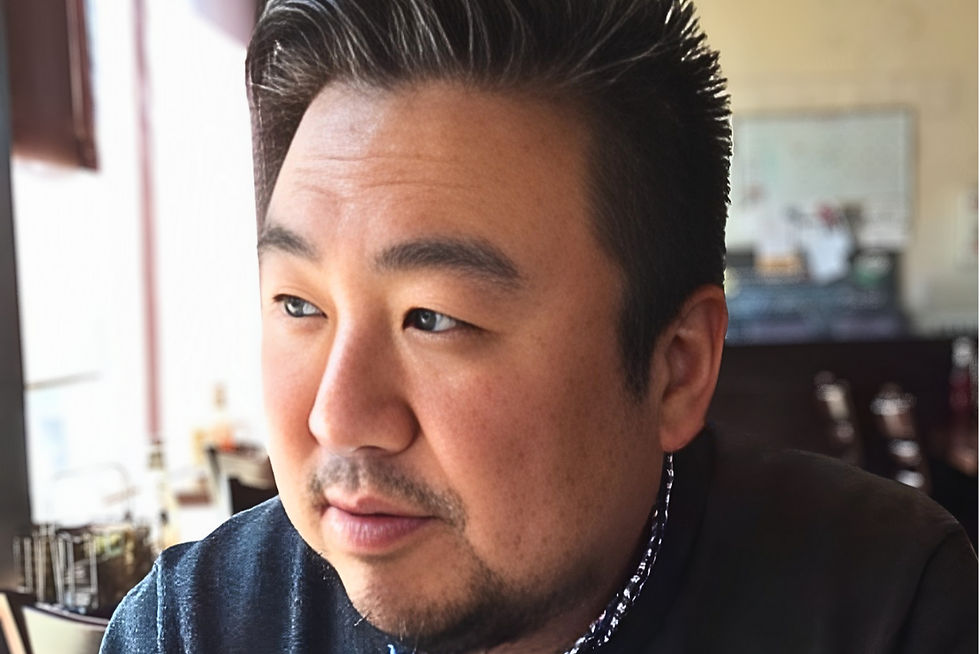
Susannah McCarthy: Prop Master
Updated: Mar 29

Susannah McCarthy builds the physical logic of a story. Her work on Mare of Easttown, Only Murders in the Building, The Gilded Age, Task, and FBI lives in details that don’t announce themselves but start to matter the second they’re wrong. We talked about how props carry character without pulling focus, the quiet corrections that happen on set, and where realism starts to break if a choice is pushed too far.
On shows like Only Murders and Mare of Easttown, what’s the invisible line between a prop that deepens character and a prop that starts pulling focus?
The invisible line may be subjective, depending on who you ask. Working with Kate Winslet (Mare of Easttown) and Meryl Streep (Only Murders in the Building) was a prop master’s dream. They had props in mind that were not scripted. These props were subtle and nuanced and deepened the character.
For instance, Kate wanted the interior of her Tahoe to look a certain way. Not just messy, but staged to show the “guts” of Mare’s life. Legos on the floor, baby snack food on the floor, Wawa coffee cups in abundance, etc.
With Meryl, something as simple as the look of her reading glasses, or the snow globe from her hometown that she brought to her first table read for Death Rattle in season three.
A prop that pulls focus is usually something written intentionally or a director ask to compel the story. Mare of Easttown was a clue-driven mystery, so many props pulled focus to plant ideas in the audience’s head. Similarly, the Death Rattle handkerchiefs and the cookies in Only Murders did the same.
When you’re breaking down a script, what’s the first tiny object or detail that tells you how the world actually works before anyone builds a set?
Prop masters don’t build sets or really contribute to that process. I read a script and do deep character dives with the showrunner, writer, production designer, and actors. I take all the input from them regarding character development and start to put together prop choices with that in mind.
I bring multiple options, each with a slightly different take on the input received. All of that collaboration results in the props that end up on screen.
In prestige dramas, truth gets lost fast. What’s the quiet correction you make on set that keeps a scene honest even when the day is chaotic?
As a prop master, the smallest details need to be “babysat” from prep to when they end up on set. I do thorough prop breakdowns with my on-set crew so the intention of each element is understood on the shoot day. The simple explanation helps props not get “lost in the sauce” on the day.
We work closely with the director, AD, and script supervisor in each scene to prevent anything from being missed. The most common quiet correction is on set with the actors. Our job is to help them feel comfortable handling the props or understanding why certain props were chosen. Sometimes the director will have a last-minute change that we try to facilitate quickly and smoothly.
Comedy and crime use props differently. What pressure or constraint usually decides how far you can push a choice before it stops feeling real?
In any genre, the decision on how far to push something ultimately comes from the writer and director. I will discuss with them the evolution of any prop in the story and how it will look, and what the story impact would be. As we discuss the prop trajectory, it usually becomes clear where, when, and how to stop pushing because of logic in the story or the cost.
Across your work from Gilded Age to FBI, what pattern stays overlooked, the one thing that tells you a scene is about to fall apart long before the camera rolls? The biggest pattern I see is that props may be overlooked in the writing when they really need to be there. In prep, there are concept meetings and prop meetings where I can raise any questions and concerns. Then the writers can go back to add, delete, or rewrite any problem areas that affect the prop world.
When Susannah talks about props, she’s talking about the logic that lets a story hold together under pressure. The invisible work is the part that keeps a scene truthful while everything around it is in motion.
Learn more about Susannah at:
• IMDb